Tile Land: Triple Match
- 4.9
- Rating
- 1.00M
- Installs
- Free
- Price

 Analysis by App-foxy
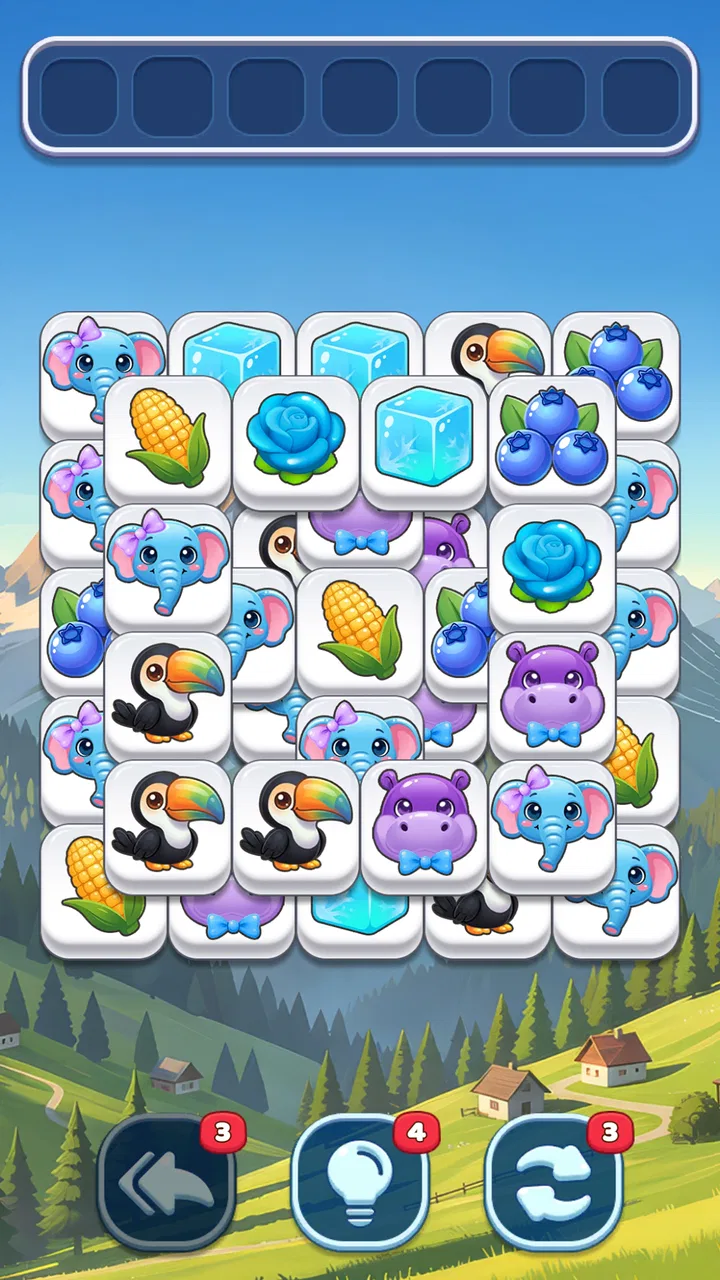
I spent time with Tile Land: Triple Match as a light, casual puzzle game, and my first impression was clear: it is built for short, calming sessions rather than intense competition. The basic appeal is easy to understand. You look for matching tiles, clear groups of three, and gradually work through a scene-collecting experience. That makes it a natural choice when I want something relaxing to play without learning a complicated rule set first.
What makes the game worth considering is not a dramatic twist, but the way its simple matching idea can fit into ordinary spare moments. I can imagine opening it while waiting for an appointment, taking a short break from work, or winding down before bed. It belongs to the casual game category, so the presentation and pace are more approachable than demanding. Still, players who want deep strategy, a strong competitive ladder, or a campaign with a clearly defined story may find its relaxed format too limited.
How the matching experience feels in everyday play
The central loop is straightforward: identify three matching tiles and remove them from the board. That simplicity is useful because I do not have to spend several minutes remembering rules before I can make progress. The scene-collection element gives the matching activity a sense of direction, so each completed puzzle feels connected to a broader visual goal instead of being only a sequence of disconnected boards.
You May Also Like

 Blood Strike: 2.5 Anniversary
Blood Strike’s Loadouts Turn Every Drop Into a Tactical Gamble
A close look at Blood Strike’s custom loadouts: how fast access to signature weapons reshapes its battle royale rhythm, rewards preparation, and narrows the gap between fights.

 Pandora - Music & Podcasts
Pandora’s Music Is Easy to Start, but Harder to Recover
Pandora’s strength is its low-effort path from a seed to a station. Its weak spot is how much confidence it asks you to place in connection, setup, and quiet recovery.

 8 Ball Pool
 Is Built on Rivalries, Rematches, and Routine
A close look at the rivalries, rematches, shared routines, and unanswered safety questions that turn a quick pool match into a persistent mobile community.

 Samsung Music
’s Quiet Strength Is Playing What You Already Own
Its reach comes less from spectacle than from dependable access to a personal library. That simplicity is both the app’s strongest retention engine and its ceiling.

 AccuWeather: Weather Radar
AccuWeather Review: A Quick, Clear Forecast for Everyday Decisions
For everyday plans, the best forecast is the one you can understand quickly. AccuWeather makes rain timing, radar, and local conditions easy to act on, with a few trade-offs.

 Hill Climb Racing
Why Hill Climb Racing Still Turns Crashes Into One More Run
A tiny car, a bumpy hill and one more upgrade: Hill Climb Racing keeps resurfacing because its simple chaos makes every near-miss feel personal.
More From Our News Desk
View All News


I found that this kind of design works best when I treat each session as a small mental reset. Rather than trying to play for a long stretch, I would approach a puzzle, scan the available tiles, and make a few deliberate matches. That habit matters because triple-match games can become less relaxing when I rush. The useful skill is not simply spotting identical pieces; it is choosing which available set to clear first so that I do not make the remaining board harder to read.
One practical tip is to pause before taking an obvious match. If several groups are available, I would first look at the tiles sitting above or around them. Clearing a visible trio may expose useful pieces, but it can also remove a layer that was helping me recognize the board’s structure. Thinking one move ahead keeps the game from becoming a blind tapping exercise and gives the casual format a modest amount of planning.
That planning is also where the game separates itself from very basic matching apps. The rules remain accessible, but the player still has to manage attention. I would not describe the experience as a demanding strategy game, yet it rewards a calm scan of the board more than frantic selection. For me, that balance is a good fit for a relaxing puzzle, especially when I want something interactive rather than passive scrolling.
A useful game for short breaks, with a particular kind of player in mind
The strongest everyday use case is the five-minute break that turns into a few focused minutes of play. Someone commuting, waiting for food, or taking a pause between household tasks can understand the objective immediately. The game’s Everyone content rating also makes its tone broadly approachable for families, although younger players may still benefit from guidance around optional spending if the device is shared.
I would recommend it most readily to people who enjoy visual sorting, gentle repetition, and puzzles that do not demand constant reaction speed. It may also suit players who like collecting progress in small pieces. The scenes provide a reason to continue beyond a single board, which can make the routine feel more satisfying than endlessly replaying an isolated matching challenge.
On the other hand, I would skip it if my priority were a rich narrative, complex character development, or highly varied mechanics. I would also look elsewhere if I wanted a game that rewards mastery through rankings or direct competition. Tile Land is better understood as a personal puzzle routine. Its appeal comes from the board in front of me and the small satisfaction of clearing it, not from proving that I am better than another player.
Progress can feel comfortable, but comfort has a trade-off
The scene-collection structure gives progress a visible purpose, but a relaxed progression system can also feel less urgent than a traditional campaign. That is not necessarily a flaw. In fact, it is part of the game’s appeal for players who dislike pressure. I can stop after a short session without feeling that I have abandoned a complicated objective or fallen behind a timed event.
The trade-off is that players who need frequent surprises may find the loop repetitive. Matching three tiles is inherently focused on repetition, and the scene layer does not change that foundation. My advice is to decide what kind of repetition I enjoy before installing it: if arranging and clearing visual groups feels satisfying, the structure should be comfortable; if I need constant mechanical novelty, the simplicity may wear thin.
A second useful habit is to separate progress goals from spending decisions. I would play a few sessions first and decide whether the ordinary puzzle rhythm is enjoyable on its own. That prevents the common mistake of paying to accelerate a game before knowing whether its core activity has enough variety for me. Since the game is free to download, trying its basic loop is a sensible way to judge the fit.
The developer is SOHI GAMES, and the game is currently listed as version 1.2.0 for devices using at least Android 9. Those details matter when deciding whether an older phone or tablet is suitable. The version information also gives me a useful checkpoint: if something behaves unexpectedly, I would first make sure the app is updated before judging the whole experience.
Spending is visible, but the fair-play question needs a careful answer
Tile Land is free, while its in-app purchases range from $0.99 to $65.99 per item. That is the main financial detail I would consider before playing. The range tells me that optional purchases can vary substantially in size, so I would not treat every offer as equally minor. On a shared device, I would use purchase controls and make sure children understand that free installation does not mean every in-game option is free.
At the same time, I do not want to claim that purchases automatically make the game unfair. The available information establishes that purchases exist, but it does not establish a particular advantage, energy system, forced advertisement pattern, or requirement to pay in order to finish puzzles. I would therefore judge the spending side cautiously: the safe approach is to enjoy the matching loop first and treat every purchase as optional until the game itself clearly shows otherwise.
From a fairness perspective, this is important. A casual puzzle can remain perfectly enjoyable for a non-paying player if purchases are convenience choices rather than necessities. But the opposite can also be frustrating if progress becomes uncomfortable without spending. I would watch how often the game presents offers, whether a normal session feels complete without them, and whether the board remains understandable without buying assistance. Those are the practical signals that matter more than the presence of a purchase menu by itself.
My own spending rule would be simple: never buy an item during a moment of frustration. If I get stuck, I would close the game or return later rather than paying immediately for relief. That approach is especially useful in a matching game because a fresh look can reveal a move I missed. It also keeps a relaxing pastime from turning into an impulsive expense.
What competitive fairness means in a non-competitive puzzle
Tile Land does not need to be evaluated like a multiplayer battle game. For this kind of personal puzzle, competitive fairness is mostly about whether the player can make satisfying progress without feeling pushed into buying help. There is no reason for me to demand esports-style balance from a scene-collecting match game, but I do expect the ordinary play path to feel worthwhile.
That distinction helps set realistic expectations. If I want a fair contest against other people, I would choose a dedicated competitive puzzle with transparent scoring and shared rules. Here, fairness is more personal: can I play at my own pace, make thoughtful matches, and enjoy collecting scenes without turning every obstacle into a payment decision? That is the standard I would apply.
The game’s strong public reception gives it a useful first impression. It has an average rating of 4.9 from around four thousand ratings, with over one million installs and eighty-six written reviews. I see that as evidence of broad interest and positive response, but not as proof that every player will have the same experience. Ratings can tell me that the concept resonates; they cannot replace trying the actual loop or deciding whether its purchase approach suits my habits.
For a fair comparison, I would place it beside other triple-match and tile-sorting games rather than against large puzzle adventures. Compared with a minimalist tile app, the scene-collection goal gives Tile Land more of a sense of destination. Compared with a heavily competitive puzzle, it should feel less stressful and less focused on performance. Compared with a story-driven casual game, it offers a narrower activity but may be easier to pick up for a brief break.
The details I would check before committing to it
There are a few questions I would keep in mind during the first sessions. The first is whether the scene rewards genuinely motivate me to continue. If I enjoy seeing the collection develop, the repeated matching has a clear purpose. If the scenes do not matter to me, the core loop has to carry the experience by itself.
The second is how the difficulty feels over time. A good triple-match game should make me think without making every board feel like a demand for payment. I would pay attention to whether I can recover from a poor move through careful play, or whether the game repeatedly places me in situations where only an optional aid seems practical. That observation is more useful than assuming either generous design or aggressive monetization without playing.
The third is session comfort. I would notice whether the visual layout remains easy to scan on my screen, particularly during longer breaks when eye strain can make a simple board feel tiring. I would also consider whether I prefer playing with sound or silently. Since the game is intended as a cozy casual experience, it should fit naturally into quiet moments, but my own surroundings will determine how comfortable each session feels.
Another point is device compatibility. The minimum operating system is Android 9, so I would check the phone’s software before expecting an installation to work. That is a small step, but it avoids confusing an older-device limitation with a problem in the game itself. The free price also makes it easy to test without an upfront purchase, provided I remain aware of the optional item range once inside.
Who should choose it, and who should pass
I think Tile Land is a good match for someone who wants a gentle tile puzzle with a collection-oriented reason to keep playing. It is especially suitable for players who like to examine a board, make a few planned choices, and stop whenever they feel finished. Families may appreciate the approachable tone and Everyone rating, while adults looking for a quiet break can use it as a low-pressure alternative to more demanding games.
I would be less enthusiastic for players who want a broad variety of game modes, a competitive community, or a story that develops through dialogue and characters. I would also be careful recommending it to anyone who is easily tempted by optional purchases. The free entry point is convenient, but the purchase range means responsible spending habits still matter. A different free puzzle may be better if its monetization style is more comfortable for that particular player.
My most specific advice is to treat the first session as a test of the core action, not as a promise to complete a collection. Try making matches slowly, notice whether planning feels rewarding, and see whether the scene goal adds motivation. If those three parts work together, the game has a good chance of becoming a pleasant daily habit. If the board already feels repetitive before the collection matters, extra progress will probably not change that reaction.
My verdict after weighing relaxation, progress, and spending
Tile Land: Triple Match succeeds because it keeps its central idea easy to approach while adding a scene-collection layer that gives each small puzzle a little more meaning. I like it as a calm, personal game for spare moments, and I appreciate that its casual identity does not pretend to offer a competitive experience. The best sessions are the ones where I slow down, scan the board, and make matches with a little foresight.
My reservation is not about the basic concept; it is about how long the simple loop will remain engaging for a particular player and how optional purchases fit into that person’s boundaries. The game is free, but items cost between $0.99 and $65.99, so I would approach spending carefully and never assume that a purchase is necessary just because it is offered. I also would not use the high rating or large install base as a substitute for personal testing.
Overall, I would recommend it to a friend who enjoys cozy triple-match puzzles and wants progress that feels more visual than competitive. I would suggest trying it with notifications and spending decisions kept under control, then judging whether the scene collection adds enough motivation to balance the repetition. For me, its trust verdict is positive but practical: enjoyable as a free casual pastime, worth testing on its own merits, and best for players who are comfortable keeping optional purchases firmly optional.
FAQs for Tile Land: Triple Match
01What is the main objective of Tile Land: Triple Match?
Tile Land: Triple Match is a puzzle game where players aim to match three identical tiles to clear levels. As you progress, the game introduces new challenges and power-ups to enhance gameplay. The objective is to strategically match tiles in the fewest moves possible to achieve high scores and unlock new levels.
02Is Tile Land: Triple Match free to play?
Yes, Tile Land: Triple Match is free to download and play on both Android and iOS platforms. However, it offers in-app purchases that can enhance the gaming experience, such as extra lives or special power-ups. Players can choose to make these purchases, but they are not necessary to enjoy the core gameplay.
03Does Tile Land: Triple Match require an internet connection?
Tile Land: Triple Match can be played offline, making it convenient for users who may not always have internet access. However, certain features, such as leaderboards and cloud saves, require an internet connection to function. Playing online can also enable participation in special events and updates.
04What age group is Tile Land: Triple Match suitable for?
Tile Land: Triple Match is designed for a broad audience and is suitable for players aged 4 and up. Its colorful graphics and straightforward mechanics make it appealing to children, while the strategic elements can engage older players. Parents can rest assured that the game is family-friendly and free from inappropriate content.
05How can I track my progress in Tile Land: Triple Match?
The game includes a built-in progress tracker that shows your level completion and scores. Players can also connect the game to social media or a gaming account to save progress across devices. This feature is especially useful for those who switch between playing on different devices, ensuring continuity in the gameplay experience.
Pros
- Engaging puzzles with increasing difficulty.
- Vibrant graphics enhance the gaming experience.
- Smooth and intuitive control system.
- Frequent updates with new levels and features.
- Minimal ads for a more enjoyable experience.
Cons
- In-app purchases can become costly.
- Requires internet for some features.
- Limited lives can hinder continuous play.
- Occasional glitches on older devices.
- No offline mode for uninterrupted play.

Tile Land: Triple Match
Gallery